High Fashion's Dirty Little Secret: Why the World's Most Exclusive Labels Are Going All-In on American Cotton
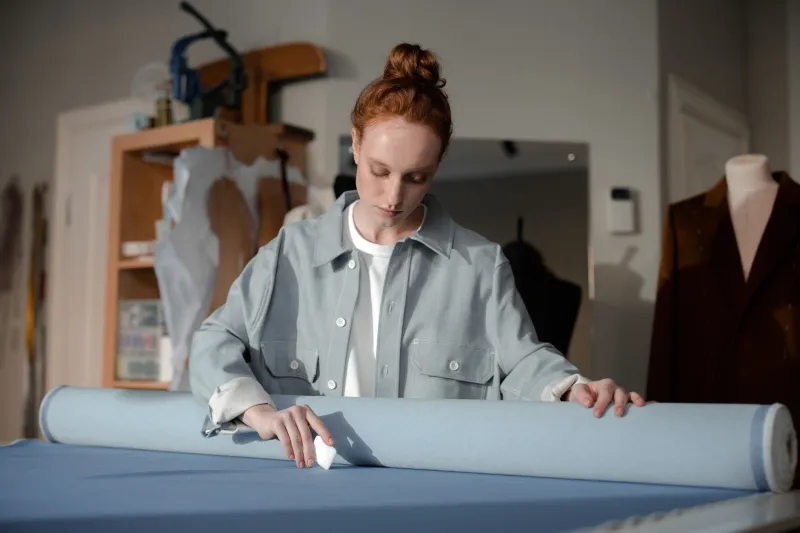
For decades, the luxury fashion world operated on a pretty simple assumption: the more complicated a fabric, the more prestigious it must be. Cashmere blended with modal. Silk cut with elastane. Technical fibers woven into everything from dress shirts to beach cover-ups. If it sounded scientific, it sold. And American cotton? That was the stuff of gas station T-shirts and bargain-bin basics.
That story is getting rewritten right now — and the people doing the rewriting are some of the most respected names in the industry.
The Shift Nobody Saw Coming
Walk through the fabric sourcing departments of certain New York and Los Angeles-based luxury labels these days, and you'll notice something different on the sample racks. Fewer blends. More single-origin. And a growing number of swatch cards stamped with two words that would have seemed almost quaint five years ago: American cotton.
The change isn't accidental. Fabric scientists and textile consultants who work with high-end brands say the pivot has been building quietly for several years, accelerated by a combination of consumer pressure, supply chain disruption, and a growing body of research on what actually makes a fabric perform over time.
"Blends were always a compromise," says one textile consultant who works with several premium American apparel brands. "You'd add a synthetic to get stretch, or to cut costs, or to hit a certain weight. But the moment you start blending, you're chasing trade-offs. Pure cotton — especially long-staple American cotton — doesn't need a rescue fiber. It's already doing everything right."
What Makes American Cotton Different
Not all cotton is created equal, and that's a point luxury buyers are finally starting to take seriously. American-grown cotton — particularly varieties cultivated in the fertile fields of Texas, Georgia, and the Carolinas — is harvested under some of the most stringent agricultural standards in the world. The fiber length, consistency, and tensile strength that come out of domestic mills are measurably different from lower-grade imported alternatives.
Long-staple American cotton, for instance, produces a yarn that's smoother, stronger, and more resistant to pilling than shorter-staple varieties. When you're building a garment meant to last a decade and retail for several hundred dollars, that distinction matters enormously.
Fabric scientist Dr. Renata Holm, who consults for textile manufacturers across the Southeast, puts it plainly: "When luxury brands started doing real wear-testing on their blends versus 100% American cotton, the results were hard to argue with. The cotton outperformed in softness retention, color stability, and structural integrity after repeated washing. The data pushed a lot of skeptics into believers pretty quickly."
Status Symbols Are Changing Shape
There's also a cultural dimension to this shift that goes beyond performance specs. The definition of luxury itself is evolving — and American consumers are leading that conversation.
For a growing segment of high-income shoppers, conspicuous branding and exotic materials no longer carry the cachet they once did. What signals status now is transparency, traceability, and intentionality. Knowing exactly where your garment came from — which farm, which mill, which hands shaped it — has become a form of social currency that no amount of polyester-blend engineering can replicate.
Several premium American labels have leaned into this hard. Some now include fiber origin cards with their garments, listing the specific region where the cotton was grown. Others have invested in mill partnerships with multi-generational American textile families, weaving that heritage directly into their brand storytelling.
The message is deliberate: this isn't just a T-shirt. It's a piece of American craft.
The Supply Chain Argument
The pandemic exposed something the fashion industry had been quietly ignoring for years — an overreliance on global supply chains that were one crisis away from collapse. When overseas fabric suppliers went dark in 2020 and 2021, brands with domestic sourcing relationships barely flinched. Everyone else scrambled.
That experience lit a fire under a lot of purchasing directors. Sourcing American cotton isn't just a values play anymore. It's a risk management strategy. Brands that have rebuilt their supply chains around domestic fiber report shorter lead times, more consistent quality control, and a much cleaner story to tell consumers who are increasingly asking hard questions about where their clothes actually come from.
"We used to treat American sourcing as a nice-to-have," one apparel brand director told us. "Now it's a core business decision. The math changed after 2020. We're not going back."
The Price Premium — and Why It's Worth It
Here's where things get interesting for the luxury consumer. Garments made with 100% American cotton typically carry a higher price tag than their blended counterparts. And yet, when you run the numbers over a garment's actual lifespan, the calculus flips.
A pure cotton shirt from an American mill, cared for properly, can maintain its structure, softness, and color for years — sometimes a decade or more. A blended alternative might look comparable on the rack but often begins degrading within a dozen wash cycles. Pilling, stretching, fading — the synthetic component accelerates every form of fabric failure.
So when a luxury brand charges a premium for 100% American cotton, they're not gouging you. They're selling you a garment you won't need to replace for a very long time. In an era when conscious consumption is reshaping how Americans think about their wardrobes, that's not just a selling point — it's a philosophy.
What This Means for the Rest of Fashion
The luxury sector rarely moves in isolation. When high-end labels normalize a material or a practice, the ripple effect tends to travel down-market within a few years. We've seen it happen with organic certification, with slow fashion principles, and with transparency in supply chain disclosures.
The current pivot toward American cotton at the top of the market is likely to set a new standard — one that mid-range and even accessible brands will eventually feel pressure to meet. That's a genuinely exciting prospect for domestic mills, American cotton farmers, and consumers who've been waiting for the fashion industry to catch up to what they already knew.
Pure fiber. Domestic craft. Lasting quality. It was never actually a compromise.
It was always the point.