From the ICU to Your Bedroom: The Medical Cotton Upgrade You Didn't Know You Needed

There's a good chance the most technically advanced cotton you've ever slept on wasn't in your own home. It was in a hospital room. Scratchy? Sure, sometimes. But underneath that utilitarian vibe was a fabric engineered to perform under conditions most of us will never put our home bedding through — industrial laundering cycles, exposure to harsh disinfectants, and the kind of repeated stress testing that would destroy a standard retail sheet set inside a month.
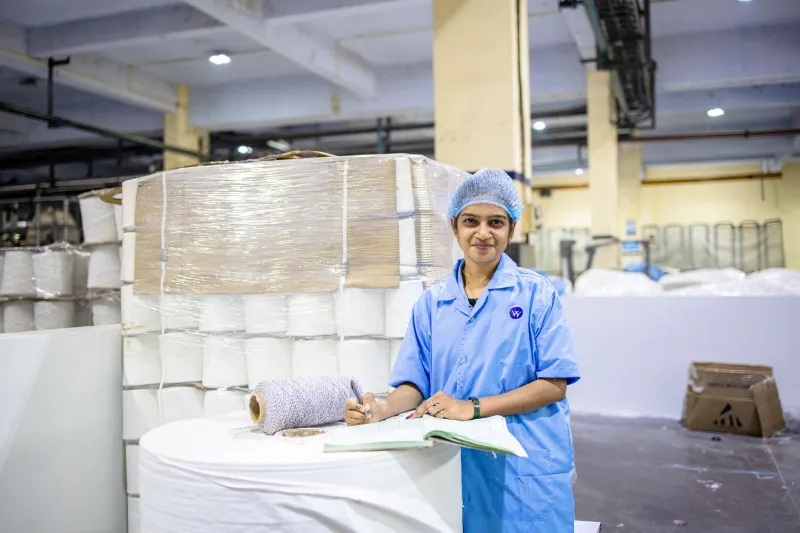
Now, something interesting is happening. American cotton mills that built their reputations supplying medical facilities are starting to pivot — or at least expand — into the consumer home goods market. And the result is a category of bedding that's genuinely different from what you'll find on most department store shelves.
What Actually Makes Cotton "Medical Grade"
Let's get specific, because this term gets thrown around loosely. Medical-grade cotton isn't just a marketing phrase — it refers to material that meets a defined set of performance benchmarks. In the healthcare context, that typically means:
Fiber purity. Medical textiles require cotton with minimal processing residue and consistent staple length. Short, inconsistent fibers create weak points in the weave that break down under stress. American Upland cotton and extra-long staple (ELS) varieties like Pima — grown domestically in states like California, Arizona, and Texas — have long been preferred by hospital procurement teams for exactly this reason.
Weave density and structural integrity. Hospital linens are woven to withstand laundering at temperatures that would shrink or distort most consumer-grade fabrics. The weave structure has to stay locked even after hundreds of wash cycles. That's not an accident — it's an engineering decision made at the mill level.
Chemical resistance. Fabrics used in clinical settings have to hold up against bleach, quaternary ammonium disinfectants, and other agents that would degrade lesser materials quickly. The cotton itself isn't magic here — it's the combination of fiber quality, weave construction, and finishing processes that determines durability under chemical exposure.
Moisture management. Hospitals need linens that absorb efficiently, dry quickly, and don't harbor bacteria in damp conditions. Cotton's natural breathability is a big part of why it's still the dominant material in medical textiles despite the availability of synthetics.
None of these qualities are exclusive to hospital use. They're just rarely prioritized in consumer bedding, where marketing budgets tend to go toward thread count numbers and packaging aesthetics rather than actual performance specs.
Why Hospitals Trusted American Mills in the First Place
This relationship goes back a long way. American cotton mills have supplied healthcare institutions for well over a century, and there are practical reasons that relationship has held. Domestic production means shorter supply chains, which matters enormously when a hospital system needs to restock quickly after a disease outbreak or natural disaster. Consistent quality control — the kind that's easier to audit when a mill is operating under U.S. labor and manufacturing standards — also plays a role.
And then there's accountability. When a hospital is buying linens, they're not just making a purchasing decision — they're taking on liability. If a fabric fails and contributes to a patient infection or a staff injury, someone is answerable. That accountability pressure has historically pushed hospital procurement toward suppliers with traceable, verifiable production processes. American mills, operating under domestic regulatory frameworks, have been able to offer that in a way that overseas suppliers often can't match as easily.
The result is that some of the most rigorous textile manufacturing in the country has quietly been happening in service of healthcare — not fashion.
The Consumer Pivot: What's Changing
So why are these mills expanding into the consumer space now? A few things are converging at once.
First, there's been a real shift in what American consumers say they want. The pandemic years accelerated a trend that was already building — people spending more time at home started paying closer attention to the quality of their immediate environment, including their bedding. Search interest in terms like "organic cotton sheets," "durable bedding," and "American-made home goods" climbed noticeably between 2020 and 2023.
Second, the fast fashion and fast home goods model is showing its cracks. Consumers who bought cheap imported sheet sets and watched them pill, shrink, or tear within a year are increasingly open to paying more for something that actually lasts. That's exactly the value proposition that mills with a medical supply background are positioned to make.
Third, some mills are simply diversifying because hospital procurement contracts, while lucrative, are highly competitive and subject to the same supply chain pressures affecting every other industry. Building a direct-to-consumer channel offers a different kind of revenue stability.
What to Look For When You're Shopping
If you want bedding that reflects these higher performance standards, here's what to actually look at — beyond the marketing copy.
Fiber origin and type. Look for products that specify American-grown cotton, ideally ELS varieties. Mills that supply medical textiles tend to source domestically because it's part of their quality control process. If a brand can't tell you where the cotton was grown, that's worth noting.
Construction details. Percale and tight-weave sateen constructions hold up better over time than loose weaves. Look for information about yarn ply (two-ply yarns are more durable than single-ply) and whether the fabric has been pre-shrunk.
Wash durability claims. Brands drawing on medical textile experience should be willing to make specific claims about how their products perform after repeated washing. Vague language like "long-lasting" is less useful than something like "maintains integrity after 200+ wash cycles."
Certifications. OEKO-TEX certification indicates the fabric has been tested for harmful substances. GOTS (Global Organic Textile Standard) certification covers the full production chain. These aren't exclusive to medical-grade suppliers, but they're consistent with the kind of quality rigor that defines that segment.
Transparency about manufacturing. Mills that have been supplying hospitals are used to being audited. That culture of transparency often carries over into how they communicate with consumers. If a brand can tell you the name of the mill and the state where their fabric was woven, that's a good sign.
The Bottom Line
The idea that your bedroom could benefit from the same material standards as a hospital linen closet might sound clinical. But strip away the institutional context and what you're really talking about is cotton that's been engineered to perform — to absorb well, last long, and hold up under real-world conditions without falling apart.
American mills built that capability over decades of supplying some of the most demanding customers in any industry. The fact that some of them are now making those same standards available for your home? That's not a gimmick. That's just good manufacturing finally finding a wider audience.