Secondhand, First Choice: How Thrifting American Cotton Is Quietly Winning the Sustainability Race
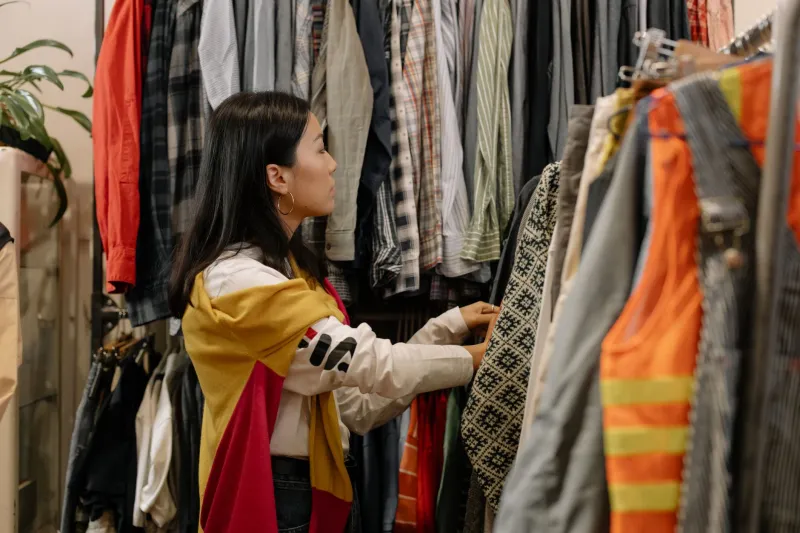
Walk into any well-curated thrift store in America right now and you'll notice something interesting. Tucked between racks of fast-fashion castoffs and synthetic blends that have already started to pill, there are pieces — sometimes decades old — that look genuinely great. A heavyweight cotton flannel shirt. A perfectly faded denim jacket. A ribbed cotton crewneck with a "Made in USA" tag still sewn neatly into the collar. These aren't accidents. They're evidence of something the resale market has quietly understood for years: American-made cotton holds up in ways that most modern garments simply don't.
The secondhand clothing market in the United States is booming. According to ThredUp's 2023 Resale Report, the US resale market is projected to reach $70 billion by 2027, growing nearly three times faster than the broader retail clothing sector. But not all secondhand items are created equal. Ask anyone who works the floor of a thrift store and they'll tell you the same thing — quality cotton, especially older American-made stuff, moves fast and holds its value.
Why Cotton's Longevity Changes the Sustainability Math
Most conversations about sustainable fashion focus on what a garment is made of at the point of purchase. Natural fibers versus synthetics, organic versus conventional, recycled versus virgin material. All of that matters. But there's another variable that often gets overlooked: how long a piece actually stays in use.
The environmental cost of producing a single cotton T-shirt — water, energy, land, transportation — is real. But that cost looks very different when spread across five years of use versus twenty. Research from the Ellen MacArthur Foundation has shown that doubling the active lifespan of a garment can reduce its environmental impact by up to 44 percent. That's not a small number. That's nearly cutting the footprint in half, just by keeping something in circulation longer.
American-made cotton garments, particularly those produced before domestic manufacturing declined sharply in the 1990s and 2000s, were built to different standards. Heavier fabric weights, tighter weaves, reinforced seams — these weren't marketing features, they were just how clothes were made when durability was expected. A lot of that construction philosophy has survived in the work of American mills and manufacturers that never left, and it's showing up in the resale market in a big way.
What Thrift Store Owners Are Actually Seeing
Talk to people who run resale shops and the pattern becomes clear pretty quickly. Jenna Calloway, who co-owns a vintage and secondhand shop in Asheville, North Carolina, says American-made cotton is consistently among her most reliable inventory.
"When something comes in with a domestic union label or a 'Made in USA' tag from the eighties or nineties, I already know it's probably going to be in good shape," she says. "The fabric hasn't thinned out. The color hasn't bled into oblivion. It's the kind of piece that customers pick up, feel the weight of, and immediately understand why it costs more than the stuff next to it."
She's not alone in that observation. Across online resale platforms like Poshmark, Depop, and eBay, American-made cotton pieces — especially workwear, basics, and denim — consistently command higher resale prices than comparable imported items of the same age. Buyers have learned to search for those tags specifically.
Circular fashion advocates point to this as proof that quality and sustainability aren't in tension — they're the same thing. "The most sustainable garment is the one that never ends up in a landfill," says Marcus Webb, a circular economy consultant based in Portland, Oregon who works with resale platforms and clothing brands. "And the pieces that stay out of landfills the longest are almost always the well-made ones. American cotton has a real advantage there."
Fast Fashion's Dirty Secret: It Doesn't Survive the Secondhand Market
Here's where the contrast gets stark. Fast fashion has made a lot of noise about sustainability initiatives — recycling programs, "conscious collections," pledges about organic cotton percentages. But there's one metric that tells a more honest story: resale viability.
Garments made from low-grade cotton blends or thin synthetic fabrics often can't survive more than a handful of wash cycles before they start to degrade visibly. Pilling, fading, fabric thinning, seam separation — these are the hallmarks of cheap construction, and they effectively end a garment's useful life early. When that happens, the piece doesn't get a second owner. It goes to textile recycling at best, or a landfill at worst.
The EPA estimates that Americans throw away about 11.3 million tons of textile waste per year. A significant portion of that is garments that simply couldn't hold up long enough to be donated or resold. The fast-fashion business model, in other words, actively undermines the secondhand economy by producing things that don't survive long enough to enter it.
American cotton, by contrast, tends to age gracefully. The fading that happens on a well-made cotton garment over years of wear often makes it more desirable, not less. That's not an accident — it's a function of how the fiber behaves when it's properly processed and woven.
How to Thrift American Cotton Smarter
If you're ready to start building your wardrobe around secondhand American-made cotton, here are a few practical tips.
Know what to look for. Union labels like the ILGWU (International Ladies' Garment Workers' Union) or ACWA (Amalgamated Clothing Workers of America) are reliable indicators of American manufacturing, particularly on pieces from the mid-twentieth century. Tags that simply read "Made in USA" combined with heavyweight fabric and solid construction are also strong signals.
Check the fabric weight. Quality cotton has heft. Hold the piece up to the light — if it's nearly see-through, it's probably not going to last much longer regardless of its origin. A dense, substantial weave is what you're after.
Don't skip the seams. Turn the garment inside out and look at how it's sewn. Double-stitched seams, reinforced stress points, and clean finishing are signs of a garment built to last. Loose threads and single-stitch construction are red flags.
Shop categories with strong American manufacturing history. Workwear, denim, athletic basics, and military-surplus adjacent styles all have deep roots in American cotton manufacturing. These are your best hunting grounds in thrift stores and on resale apps.
The Bigger Picture
Thrifting American cotton isn't just a personal style choice — it's a vote for a different kind of fashion economy. One where garments are made well enough to be owned by multiple people across decades, where quality is measured in years of use rather than seasons of trend, and where the environmental cost of production gets amortized across a genuinely long lifespan.
The secondhand market is growing because consumers are getting smarter. They're starting to ask the same questions that good thrift store buyers have always asked: Is this actually well made? Will it last? And increasingly, the answer they're finding sewn into the collar of a vintage American cotton piece is yes.
That's a revolution worth getting behind — one rack at a time.