The Farmer Behind Your T-Shirt Is Fighting Climate Change. Here's How.

Climate conversations can feel overwhelming fast. Carbon credits, scope emissions, lifecycle analyses — it's a lot to absorb, and most of it feels abstract. But here's something concrete: the cotton in your clothes has a geography. It came from somewhere. And if that somewhere is the United States, the environmental story attached to it is dramatically different from what you'd get anywhere else.
This isn't greenwashing. It's geography, agricultural policy, and two decades of quiet innovation happening in cotton fields from West Texas to the Carolinas. American cotton farmers are your secret advantage in the climate conversation — and most people have no idea.
The Supply Chain Problem Nobody Talks About
When a cotton garment is made overseas and shipped to the US, it typically crosses multiple countries before it reaches your closet. Cotton might be grown in one nation, ginned in another, spun into yarn in a third, woven into fabric in a fourth, cut and sewn in a fifth, and finally shipped across an ocean to reach an American retailer. Each of those legs has an emissions footprint. Each one adds transportation, energy consumption, and complexity.
Domestic cotton collapses that chain dramatically. American-grown cotton that's spun, woven, and finished in US mills — increasingly a reality as domestic manufacturing continues its revival — travels a fraction of the distance. Shorter supply chains mean lower transportation emissions, period. That's not an opinion; it's logistics.
But the supply chain is just the beginning.
What's Actually Happening in American Cotton Fields
US cotton farmers have cut their water use by roughly 80% over the past 35 years. That's not a typo. Through a combination of precision irrigation technology, drought-tolerant seed development, and smarter soil management, American growers have made dramatic efficiency gains that most consumers never hear about.
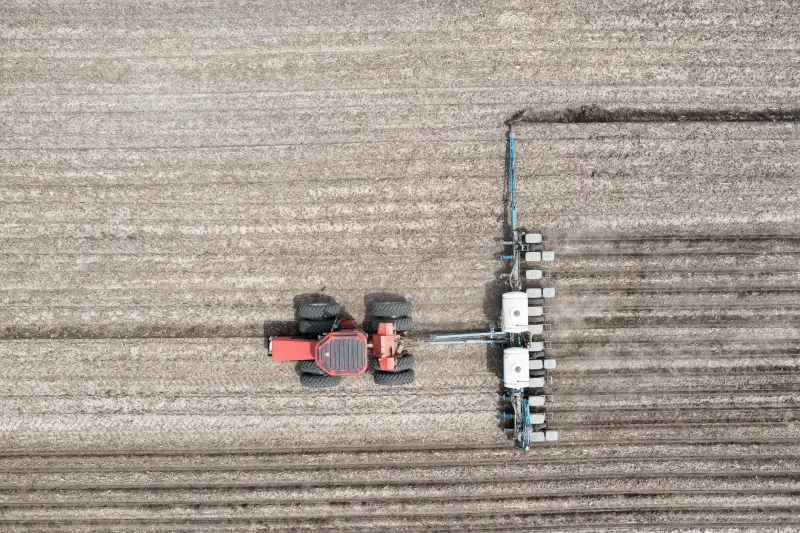
In the Texas High Plains — which produces roughly 40% of the entire US cotton crop — drip irrigation and soil moisture sensors have become increasingly standard. Farmers there are managing one of the more water-stressed regions in the country, and they've responded with genuine innovation rather than simply relocating the problem.
In California's San Joaquin Valley, water recycling systems and regulated deficit irrigation have allowed growers to maintain yields while using significantly less water per pound of fiber than the global average. These aren't experimental pilots. They're mainstream farming practices, driven by both economic necessity and environmental accountability.
Regenerative Agriculture Is Taking Root
Beyond water, a growing movement within American cotton farming is pushing toward regenerative practices — an approach that goes beyond "doing less harm" and actively works to restore soil health, sequester carbon, and support biodiversity.
Cover cropping, reduced tillage, and integrated pest management are spreading across cotton-producing states. The USDA's Conservation Stewardship Program has channeled resources toward cotton farmers willing to adopt these practices, and organizations like the US Cotton Trust Protocol have built third-party verification systems to actually measure and track environmental outcomes — not just make claims about them.
The Trust Protocol, in particular, is worth knowing about. It provides field-level data on water use, soil carbon, energy use, greenhouse gas emissions, and land use efficiency. Brands that source cotton through this program aren't just taking a farmer's word for it — they're working with verified metrics. That kind of transparency is essentially nonexistent in most global cotton supply chains.
In the Southeast, farmers in Georgia and the Carolinas are experimenting with agroforestry — integrating trees into cotton landscapes to improve carbon sequestration and create habitat corridors for pollinators. It's early-stage work, but the fact that it's happening at commercial scale is significant.
The Soil Carbon Opportunity
Here's something that doesn't get nearly enough attention: healthy agricultural soil is one of the most powerful carbon sinks on the planet. When farming practices degrade soil — through heavy tillage, monoculture without rotation, and excessive synthetic inputs — soil loses its ability to hold carbon and releases it into the atmosphere instead.
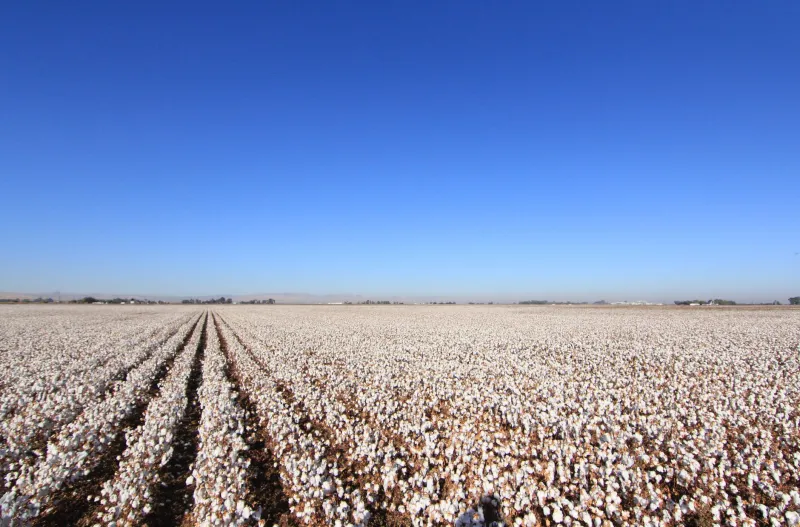
American cotton farmers adopting regenerative practices are working in the opposite direction. By building organic matter, reducing disturbance, and keeping soil covered, they're turning cotton fields into slow but meaningful carbon banks. The scale isn't trivial — the US has roughly 10 million acres of cotton in production in an average year. Even modest improvements in soil carbon across that acreage add up.
This isn't a solved problem, and nobody's claiming otherwise. But the research infrastructure, the agricultural extension programs, and the farmer-led experimentation happening right now in American cotton country represents a level of investment and accountability that simply doesn't exist in most offshore growing regions.
Your Purchase Is a Policy Signal
Here's where it gets personal. Agricultural systems respond to market demand. When American consumers consistently choose imported cotton products — often without knowing the environmental difference — they're effectively subsidizing supply chains with far less oversight and far greater environmental cost.
When you choose American-made cotton, you're sending a different signal. You're supporting the farmers who are doing the hard work of innovating within a regulated, accountable system. You're funding the domestic mills that provide the market for domestically grown fiber. And you're helping make the economics of responsible American agriculture work.
This isn't about nationalism. It's about traceability and accountability. American cotton operates under US environmental regulations, labor standards, and agricultural oversight that simply don't apply to foreign production. Choosing it is one of the clearest, most direct ways a consumer can connect their purchasing behavior to real environmental outcomes.
The Accessible Climate Action You've Been Looking For
A lot of climate-conscious consumers feel stuck between wanting to make a difference and not knowing what actually moves the needle. Switching to an EV is expensive. Installing solar takes capital and a roof you own. Changing your diet is personal and complicated.
Buying American-made cotton is none of those things. It's a shirt. It's a pair of jeans. It's a set of sheets. It's a purchasing decision you're already making — just redirected toward a supply chain with a demonstrably better environmental profile.
The farmer behind your t-shirt is managing water in a drought-prone region with precision tools your grandparents couldn't have imagined. They're building soil health one cover crop at a time. They're participating in verification programs that hold them to measurable standards. They're doing the work.
All you have to do is read the label.