Once a Polyester Person: Real Stories from Folks Who Found Their Way Back to Cotton

Photo: Jami430, CC BY-SA 4.0, via Wikimedia Commons
There's a particular kind of moment that cotton converts talk about. It doesn't happen in a store. It doesn't happen while reading an article. It usually happens on a Tuesday, wearing some technical fabric shirt to a work meeting, and suddenly thinking: why does my skin feel like it's wrapped in a grocery bag?
That's the moment. The one that sends people back to cotton.
Over the past few years, a quiet but real shift has been happening across American closets. People who spent the better part of a decade chasing moisture-wicking, four-way-stretch, antimicrobial performance fabrics are rediscovering something their grandparents never questioned: cotton just works. Not in a flashy, technologically impressive way. Just steadily, comfortably, reliably.
Here's what that journey actually looks like.
The Performance Fabric Promise That Didn't Quite Deliver
To understand why people are coming back to cotton, you have to understand why they left in the first place.
Starting in the early 2000s, athletic and performance fabrics started making serious inroads into everyday American wardrobes. Brands marketed polyester blends and synthetic fibers as superior in almost every measurable way: lighter, faster-drying, more durable, better for active lifestyles. The pitch was compelling, and it worked.
For a while, it felt like cotton was getting left behind. The word "breathable" got hijacked by synthetic marketing and applied to fabrics that, if you're being honest, really just wick sweat from one place to another rather than letting your skin actually breathe.
But then something interesting happened. People started living in these fabrics full-time — not just at the gym, but at the office, at dinner, at home — and the cracks started showing. The static. The smell retention after a few months of wear. The way certain synthetics look slightly shiny and cheap under fluorescent lighting. The persistent low-grade skin irritation that's hard to pin down but impossible to ignore once you notice it.
And slowly, people started reaching back toward the cotton shelf.
The Trigger Moments
Every cotton convert has a story. The trigger is different for everyone, but the pattern is remarkably consistent: one specific, tangible moment of discomfort or dissatisfaction that made the synthetic promise feel hollow.
For some people, it's a skin reaction. Eczema that flares up. A rash that appears after a long day in a polyester blend. A dermatologist who quietly suggests switching to natural fibers and — almost immediately — things improve.
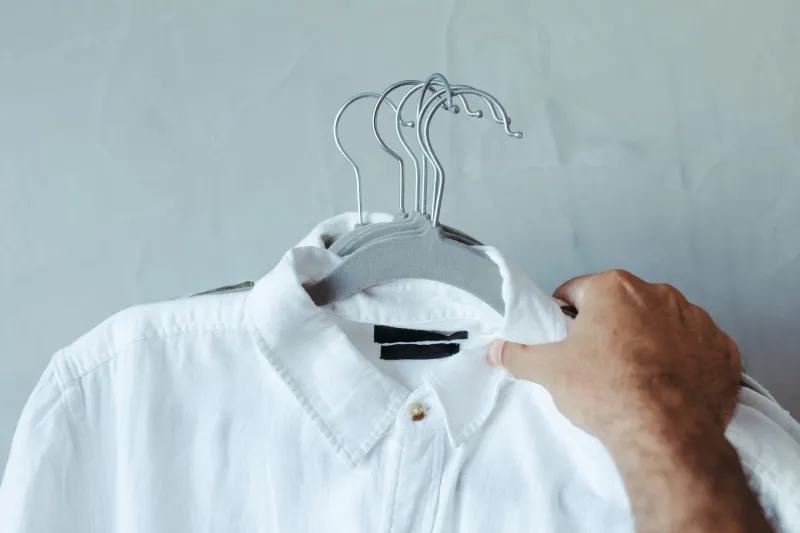
For others, it's more mundane. One person described finally putting on an old American-made cotton oxford shirt that had been in the back of their closet for years — something they'd stopped reaching for in favor of "better" options — and being genuinely surprised by how comfortable it felt. "I forgot that clothes could just feel good without doing anything special," they said. "It wasn't wicking anything. It wasn't regulating anything. It was just a shirt. And it was perfect."
For others still, the trigger is laundry. Specifically, the moment you realize that your expensive performance fabric shirts smell faintly off even after washing — a known issue with synthetic fibers that trap odor-causing bacteria in ways that cotton simply doesn't. Once you notice it, you can't un-notice it.
What Grandma Already Knew
There's a generational dimension to this story that's worth sitting with for a minute.
The people who are rediscovering cotton today are largely doing so by circling back to something their grandparents and great-grandparents never abandoned. For most of American history, cotton wasn't a lifestyle choice — it was just what clothes were made of. American-grown, American-milled, American-worn. The idea that you'd need a synthetic alternative for everyday comfort would have seemed genuinely strange.
That institutional knowledge got lost somewhere in the marketing shuffle of the last few decades. Performance fabric brands were extremely good at making cotton seem old-fashioned, passive, and insufficient. And for a while, that narrative stuck.
But knowledge has a way of circling back. People who grew up wearing cotton — or who watched their parents and grandparents wear the same cotton pieces for decades without complaint — are starting to connect those dots. There's a reason grandma's cotton housedress lasted thirty years. There's a reason grandpa's work shirts from an American mill are still technically wearable. Quality materials, honestly made, just hold up.
The Psychological Shift
What's interesting about cotton converts isn't just the practical reasons behind the switch — it's the psychological ones.
A lot of people describe a sense of relief when they simplify their wardrobe back to natural fibers. The decision fatigue that comes with a closet full of performance fabrics optimized for specific activities — this one for hiking, this one for the office, this one for travel — gives way to something more straightforward. Good cotton works everywhere. You don't need to think about it.
There's also something about the tactile experience of quality cotton that registers on a deeper level than most people expect. Fabric is the thing touching your skin all day, every day. When that experience is genuinely pleasant rather than merely tolerable, it affects your mood, your comfort, and — according to some research — even your stress levels in subtle ways.
Simplifying to cotton isn't just a wardrobe decision. For a lot of people, it's a broader statement about preferring things that are honest and straightforward over things that are engineered and optimized. That resonates right now in a particular way.
Making the Switch Without Starting Over
If any of this sounds familiar — if you've been living in synthetics and wondering whether there's something better — the good news is you don't have to overhaul everything at once.
Start with the basics. A well-made American cotton tee. A solid cotton button-down. A pair of cotton chinos or jeans. Wear them. Pay attention to how your skin feels at the end of the day compared to your synthetic alternatives.
Be patient with the adjustment. If you've been wearing performance fabrics for years, pure cotton might feel heavier at first — not because it is heavier in any meaningful way, but because your expectations have been calibrated to a different kind of fabric experience. Give it a few weeks.
And when you're shopping, look for American-made options. Not because of any abstract patriotic sentiment, but because domestic cotton production and milling still tends to prioritize fiber quality and processing standards in ways that translate directly to a better wearing experience.
Your grandparents didn't need a performance fabric. Neither do you.