Confessions of a Fashion Editor: How a Saturday Morning Closet Cleanout Led to a Full Wardrobe Overhaul
There's a particular kind of dread that sets in when you open a packed closet and feel nothing. Not overwhelmed, not excited — just nothing. Fashion insiders have a name for it now: closet fatigue. And it turns out the people most susceptible to it are the exact people you'd least expect — the stylists, the editors, the trend forecasters who built their careers on accumulating more.
Over the past couple of years, a quiet but significant shift has been playing out in the personal wardrobes of some of the most style-conscious people in the country. The closet audit — once a dreaded annual chore — has become something closer to a reckoning. And what these professionals are discovering on the other side of it is reshaping how they think about getting dressed every single morning.
What Closet Fatigue Actually Feels Like
If you've ever stood in front of a full closet and announced you have nothing to wear, you already know the feeling. But for fashion editors, the experience hits differently. These are people who receive samples, attend market appointments, and spend entire workdays surrounded by new product. The volume of clothing that flows through their lives is staggering.
And yet — or maybe because of it — many of them describe reaching a breaking point. The closet stops feeling like a creative resource and starts feeling like a burden. Pieces bought on impulse, trend-driven purchases that aged out in a single season, synthetic fabrics that pilled after three washes. The sheer noise of it all becomes exhausting.
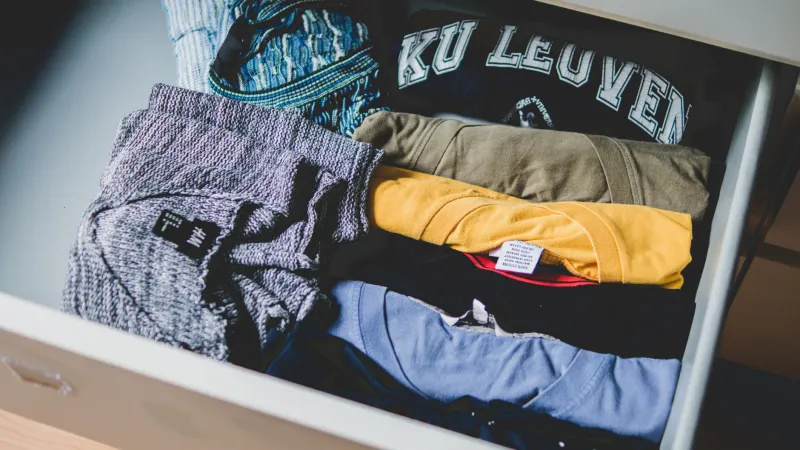
One stylist based in Brooklyn described her pre-audit closet as "a graveyard of good intentions." She had pieces she'd never worn, pieces she'd worn once, and almost nothing she genuinely reached for with any enthusiasm. The stuff she actually loved — a few well-worn cotton tees, a pair of straight-leg chinos, a classic crewneck — was getting buried under everything else.
That experience, repeated across dressing rooms and walk-in closets from Nashville to Chicago, is what's driving the shift.
The Edit That Changes Everything
The closet audit process itself isn't new. What's changed is what people are doing after the edit. Instead of replacing the discarded pieces with more of the same, a growing number of fashion professionals are using the empty hangers as a mandate to start over with intention.
And when they rebuild, they're reaching for American-made cotton basics — not as a compromise, but as a deliberate upgrade.
The reasoning isn't complicated. When you strip a wardrobe down and force yourself to identify the pieces that actually earn their space, a pattern emerges. The things that survive the audit almost always share a few qualities: they're comfortable, they're versatile, they photograph well, and they've held their shape and color through repeated wear. More often than not, they're made from quality cotton — and increasingly, editors are tracing that quality back to domestic production.
American-grown cotton, processed and sewn in U.S. mills, tends to deliver a consistency in hand-feel and construction that imported fast fashion simply can't match. The difference isn't subtle once you've felt it. A well-made American cotton tee has a weight and drape that a $6 import just doesn't replicate — and that gap becomes obvious when you're building a wardrobe meant to last.
The Specific Pieces That Keep Coming Up
Ask a stylist what survived their closet audit and you'll hear the same categories repeated with striking consistency.
The fitted crewneck tee. Not oversized, not boxy — just a clean, well-proportioned tee in a neutral that works under blazers, tucked into trousers, or worn solo. Editors tend to own two or three in rotation. The key detail they look for: a substantial cotton weight that doesn't go sheer after washing and doesn't lose its shape at the collar.
The straight-leg cotton pant. Whether it reads as casual or polished depends entirely on what's paired with it. That versatility is exactly the point. A well-cut straight leg in a sturdy cotton twill or canvas carries a wardrobe from coffee to client meeting without requiring a costume change.
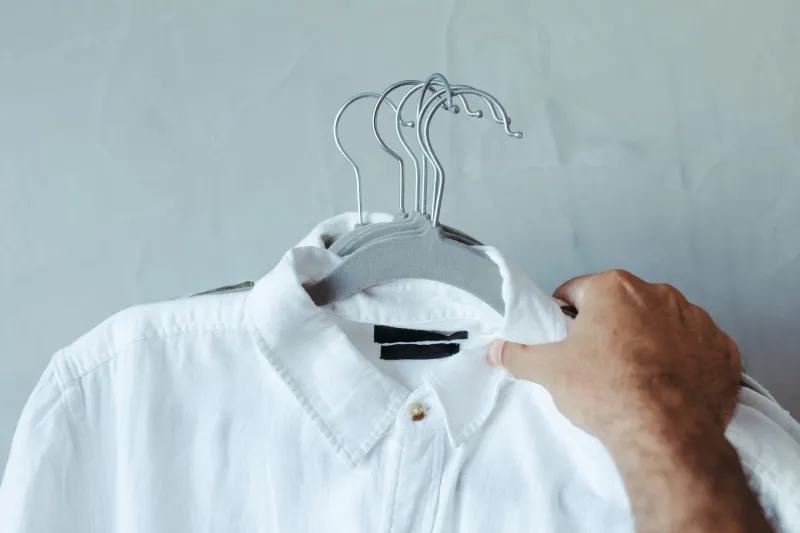
The classic button-down. Chambray or poplin, tucked or untucked, it remains one of the most enduring pieces in American style. Stylists who've been through the audit process describe letting go of a dozen novelty tops to make room for one genuinely excellent cotton button-down that they'll actually wear three times a week.
The midweight sweatshirt. Not a fashion statement, not a logo piece — just a clean, well-constructed sweatshirt in 100% cotton fleece. The kind that gets softer with every wash instead of pilling into oblivion.
What ties all of these together isn't a particular aesthetic. It's a commitment to utility and longevity over novelty.
The Psychology Behind the Pivot
Fashion psychologists have started paying attention to this trend, and the explanation they keep returning to is decision fatigue. When your closet presents too many choices — especially choices that feel arbitrary or low-stakes — getting dressed becomes a draining micro-decision rather than an easy, enjoyable one.
Paring down to a smaller number of high-quality pieces that all work together eliminates that friction. The wardrobe stops being a problem to solve every morning and starts being a system that just works.
There's also something worth noting about the emotional relationship people develop with well-made clothes. A tee that cost three times as much as a fast-fashion alternative but has survived two years of regular washing without losing its shape starts to feel like a reliable friend. You trust it. That emotional dimension — the confidence that comes from knowing exactly what you're wearing and knowing it looks right — is something the fast-fashion churn can't manufacture.
Why American-Made Matters in This Context
For fashion editors who've gone through this process, the domestic origin of their rebuilt wardrobe isn't just a talking point — it's a logical extension of the same values driving the audit itself.
Choosing American-made cotton means choosing transparency. You can trace the supply chain. You can understand what you're wearing and where it came from. In a wardrobe built around intention rather than impulse, that traceability matters.
It also means supporting the domestic textile infrastructure — the mills in the Carolinas, the farms across the South and Southwest, the craftspeople who've kept American cotton production alive through decades of offshoring pressure. When a fashion editor invests in a domestically made basic, they're casting a vote for that ecosystem to continue existing.
The Wardrobe You Actually Use
Here's the thing nobody in fashion likes to say out loud: most people — including the professionals — wear about 20% of their wardrobe 80% of the time. The closet audit just makes that math visible.
Once you see it clearly, the logical response isn't to buy more. It's to make that 20% as good as it can possibly be, and let the rest go.
For a growing number of stylists and editors, that means a smaller, quieter wardrobe built around American cotton basics that earn their keep every single week. Less scrolling, less clutter, less waste — and somehow, more style.
The closet audit isn't a punishment. It's an invitation to figure out what you actually love — and then go find the American-made version of it.