Keep, Donate, or Trash? Why American Cotton Always Lands in the Right Pile

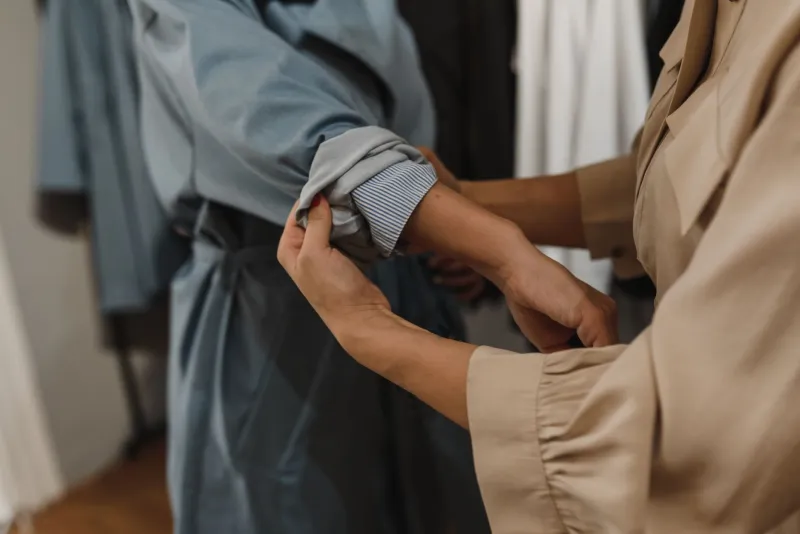
Photo: woman organizing clothes during spring closet cleanout sorting pile, via thumbs.dreamstime.com
Spring cleaning your closet is one of those rituals that starts with good intentions and ends with you sitting on the floor at 11 PM, holding a shirt you haven't worn in three years and wondering why you still can't let it go. Sound familiar?
Here's the thing: that shirt you're holding onto? There's a decent chance it's American cotton. And that pile of stuff you're bagging up for Goodwill? Probably a lot of polyester blends, moisture-wicking mystery fabrics, and whatever "bamboo-rayon" actually means.
This isn't a coincidence. There's real logic behind why quality American cotton pieces consistently survive the brutal closet audit while everything else gets cut. Let's break it down.
The Brutal Truth About Closet Audits
When you do a real spring cleanout — the kind where you touch every single item and ask "does this still serve me?" — you're running a pretty effective quality test. Clothes that pill, stretch weird, fade to a sad gray, or just feel uncomfortable the moment you put them on get the axe fast. No mercy.
And here's where American-made cotton starts to separate itself from the pack. Quality domestic cotton is grown and processed with tighter standards than a lot of imported alternatives. The fiber length, the spinning consistency, the finishing — all of it adds up to a fabric that holds its shape, keeps its color, and stays comfortable wash after wash.
Synthetics, on the other hand, are sneaky. They feel fine in the store. They look great on the hanger. But after a year of regular wear and washing, they start to show their true character. Pilling. Static cling. That slightly plasticky smell after a warm day. Your closet audit has zero patience for any of that.
The "Still Fits Right" Factor
One of the most underrated reasons American cotton survives spring cleaning is simple: it still fits right.
Good cotton doesn't lose its structure the way blended fabrics do. A well-made American cotton tee or oxford shirt drapes the same way after fifty washes as it did after five. The collar doesn't warp. The hem doesn't flare out weird. The shoulders haven't migrated somewhere strange.
Blended fabrics — especially anything with a significant polyester content — tend to develop what you might call "memory problems." They remember every awkward stretch, every too-hot dryer cycle, every time you pulled them over your head the wrong way. Over time, that adds up to a garment that just doesn't sit right anymore.
When you're standing in front of your closet making keep-or-donate decisions, fit is almost always the first filter. American cotton tends to pass it. A lot of synthetics don't.
Why You're Emotionally Attached (And That's Okay)
Let's talk about the sentimental pile. You know the one — the items you can't quite let go of even though you can't fully explain why.
More often than not, those pieces are cotton. A worn-in flannel shirt. A perfectly faded denim jacket. A simple white tee that somehow just works with everything. These items have earned a kind of emotional equity that synthetic performance fabrics rarely achieve.
There's a reason for that beyond nostalgia. Cotton gets better with age in a way that's genuinely satisfying. It softens. It conforms to your body. It develops a lived-in quality that feels personal rather than worn out. Synthetics just get... older. There's a difference.
So when you're doing your spring audit and you hit that pile of emotionally significant pieces, you're not being irrational. You're responding to real quality signals — just through the lens of lived experience rather than a fabric label.
The Donation Bag Math
Here's a practical way to think about it. If you've bought ten pieces of clothing in the last three years and half of them are already headed for the donation bag, you've effectively paid full price for half a wardrobe. That's a brutal return on investment.
American-made cotton pieces typically cost more upfront. That's just reality. But if a $65 American cotton tee is still in your rotation five years later while three $22 import blends have already cycled through your closet, the math flips pretty quickly.
Spring cleaning has a way of making this visible in a way that ordinary shopping decisions don't. When you're physically handling every item you own and sorting it into piles, the cost-per-wear reality becomes impossible to ignore.
The Practical Stuff: What Actually Survives
If you want to audit your closet with a more intentional eye, here's what to look for when deciding whether a cotton piece earns its spot:
Color integrity. Quality American cotton holds dye well. If a piece has kept its color without significant fading or uneven bleaching, that's a good sign of quality fiber and responsible processing.
Surface texture. Run your hand across the fabric. Pilling — those little fuzzy balls that form on the surface — is a sign of shorter, lower-quality fibers breaking down. American cotton, particularly ring-spun varieties, tends to resist pilling significantly better than imported blends.
Structural shape. Lay the item flat. Does it still look the way it's supposed to? Collars, cuffs, hems, and seams should all be holding their intended shape. If things have migrated or warped, that garment is on borrowed time.
Comfort on contact. This one's simple. Put it on. Does it feel good against your skin immediately? Quality cotton should. Synthetics that have been through significant wear often develop a rougher texture or a slightly irritating quality that makes the decision easy.
What Your Closet Is Actually Telling You
Your spring cleaning isn't just a seasonal chore. It's a feedback loop. Every time you sort through your clothes and notice which pieces keep making the cut, you're getting useful data about what's worth buying going forward.
If American cotton keeps landing in the keep pile — and it will — that's worth paying attention to. It's not just sentiment. It's not just habit. It's the accumulated evidence of better materials, better construction, and a supply chain that prioritizes quality over margin.
Next time you're shopping and you're tempted by a cheaper blended alternative, think about your closet floor in April. Think about which pile it's going to end up in. Then make the call.
Your future self — the one doing the spring cleaning — will thank you.